

Group selfies involve head-to-head contact, which has created a modern transmission pathway for head lice that did not exist a generation ago. At Lice Lifters of Ocean County, we have tracked a measurable increase in teen lice cases across Toms River, Brick, Lacey, and Point Pleasant over the past several years, and the connection to social media culture and shared personal electronics is impossible to ignore. Understanding exactly how modern teen behaviors facilitate lice transmission helps families in Ocean County take smarter, more targeted precautions.
Why Are Teens Getting Lice More Frequently Than a Decade Ago?
For decades, conventional wisdom held that head lice primarily affected children between ages 3 and 11. While that age group still represents the majority of reported cases, teens can get lice too. The CDC estimates that 6 to 12 million lice infestations occur annually in the United States among children ages 3 to 11.
The shift is driven by the frequency and nature of close physical contact in teen social life. Selfie culture, earbud sharing, group video creation for platforms like TikTok and Instagram, and the social dynamics of sleepovers and sporting events all create repeated opportunities for head-to-head or item-to-head transfer. At our Ocean County clinic, teens now account for nearly one in five treatment appointments, a proportion that has roughly doubled since 2018.
The Selfie Factor and Group Photo Culture
Taking group selfies requires pressing heads together, which is exactly the type of direct contact lice need to crawl from one host to another. In Jackson, Lacey, Barnegat, and across Ocean County, a single afternoon teen gathering can involve dozens of selfie opportunities, each one a potential transfer event.
Beyond standard selfies, the rise of short-form video content has amplified the risk even further. Teens creating TikTok videos, Instagram Reels, or Snapchat stories frequently lean together for extended periods while reviewing and re-recording footage.
How Do Shared Earbuds and Headphones Spread Head Lice?
Earbud sharing is one of the most deeply ingrained habits among today’s teenagers. While lice cannot survive on earbuds for extended periods since they need human blood to survive, the transfer mechanism is indirect but effective. When a teen with an active infestation removes an earbud, a louse or nit attached to a stray hair can cling to the earbud surface or its cord. When another teen inserts that earbud, the louse or hair-attached nit transfers directly to the area behind the ear, one of the most common lice colonization sites on the human head.
Over-ear headphones present a similar but slightly different risk. Lice found near the ears and the nape of the neck are especially likely to transfer via shared items that make contact with those areas. Gaming headsets shared during multiplayer sessions, studio headphones passed around during music classes at Toms River or Brick high schools, and noise-canceling headphones traded during bus rides all represent plausible transfer scenarios. The key factor is the warmth and proximity to the scalp, which keeps any transferred louse alive long enough to establish itself on a new host.
The Role of Sports and Extracurricular Contact
Teen sports create uniquely high-risk lice transmission environments. Wrestling, football, cheerleading, and basketball all involve close physical contact. Shared helmets, headbands, hair ties, and even towels in locker rooms contribute to the risk. Ocean County high school athletic programs should incorporate lice awareness into their standard health and hygiene protocols, particularly during fall and winter sports seasons when cases tend to spike.
What Are the Warning Signs of Lice in Teenagers?
Teens often miss or dismiss the early signs of a lice infestation because they attribute symptoms to other causes. Persistent itching behind the ears or at the nape of the neck is the most common indicator, but many people with lice experience no itching at all during the first 4 to 6 weeks of an infestation because the allergic response to louse saliva has not yet developed. This means a teen can be infested and actively spreading lice for more than a month before any symptoms appear.
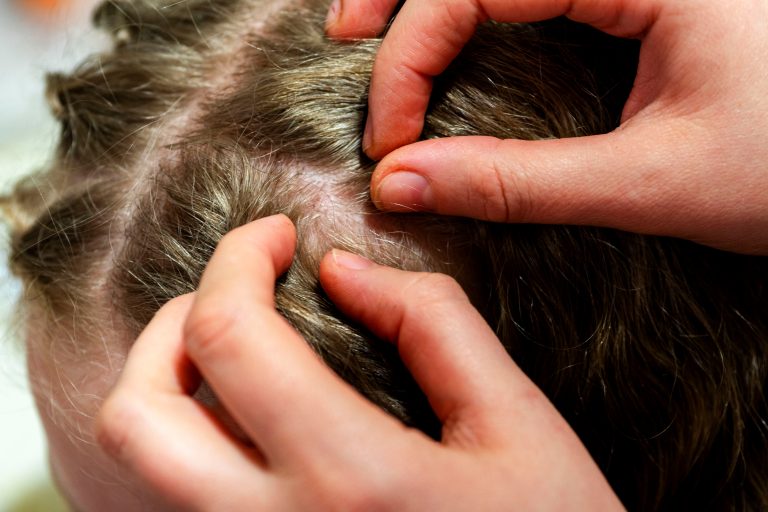
Other warning signs include finding small tan or brown specks near the hair roots that do not flick away easily, as these are likely nits glued to the hair shaft. Teens may also notice tiny red bumps on the scalp, neck, or behind the ears from louse bites. Secondary bacterial infections can occur from excessive scratching, making early detection particularly important. If your teen reports persistent scalp irritation or you notice them scratching frequently, a professional head check at Lice Lifters of Ocean County can provide a definitive answer within minutes.
Why Teens Are Reluctant to Report Symptoms
The social stigma surrounding head lice is significantly amplified during adolescence. This reluctance leads to delayed treatment, prolonged infestations, and increased transmission to friends and family members. Parents of teens in Ocean County should normalize conversations about lice, emphasize that it has nothing to do with hygiene, and establish an open-door policy for reporting symptoms without judgment.
How Can Ocean County Parents Prevent Lice in Their Teens?
Prevention starts with education and practical habit changes. While you cannot eliminate all lice risk, you can dramatically reduce it by addressing the specific behaviors that drive teen transmission. The CDC recommends avoiding head-to-head contact during play and other activities as the single most effective prevention strategy, but for teens, this requires a more nuanced conversation about modern social behaviors.
Encourage your teen to use a selfie stick or extended arm rather than pressing heads together for group photos. Provide personal earbuds and explain why sharing audio equipment creates risk. Direct head-to-head contact is the main way lice spread, so any behavior modification that reduces scalp-to-scalp proximity will meaningfully lower risk. Teens who participate in contact sports should keep their own labeled helmet liners, hair ties, and towels. Weekly head checks with a fine-toothed nit comb, ideally after washing hair with conditioner, remain one of the most effective early detection strategies.
Building a Prevention Routine That Teens Will Follow
Teens are more likely to adopt prevention habits if they understand the reasoning behind them rather than simply being told what to do. Explain the biology of lice transmission in straightforward terms: lice cannot jump or fly, they can only crawl, and they need direct contact or a very recently shared item to transfer. Prevention products containing repellent ingredients like rosemary oil or tea tree oil can be applied to hair before school and social events, though these products work as deterrents rather than treatments and should not replace regular head checks.
What Should You Do If Your Teen Has Lice?
If you confirm or suspect a lice infestation, swift action prevents the problem from spreading further. Over-the-counter lice treatments containing permethrin or pyrethrin have become significantly less effective due to widespread resistance. Many head lice in the United States now carry genetic mutations that make them resistant to permethrin-based treatments, commonly known as super lice. This means the products lining pharmacy shelves in Toms River or Brick are unlikely to resolve an active infestation.
Professional treatment at Lice Lifters of Ocean County uses an enzyme-based, non-toxic approach that dissolves the glue holding nits to the hair shaft and eliminates live lice without relying on pesticides. The entire process typically takes about an hour, is completely safe for teens, and comes with a 30-day guarantee. After treatment, your teen can return to school, sports, and social activities immediately with no risk of spreading lice. We also check all family members during the visit, since household transmission rates are high once one member is infested.
Frequently Asked Questions About Head Lice in Teens
Can lice spread through sharing phones or tablets?
Lice cannot spread through phone or tablet screens themselves, as they require direct contact with hair or scalp. However, the behavior of huddling together to look at a single screen creates the head-to-head proximity that facilitates lice transfer. The CDC confirms that lice crawl and cannot jump or fly, so the risk comes from the closeness of heads rather than the device itself. Encourage teens to share content by sending links rather than clustering around one screen.
Are lice more common in teens who dye or straighten their hair?
Hair treatments like dyeing and chemical straightening do not reliably prevent or attract lice. Harsh chemicals from very recent treatments may temporarily affect lice survival rates, but this effect is neither consistent nor strong enough to serve as a prevention method. Lice attach to the hair shaft regardless of its texture, color, or chemical treatment history. Teens with treated hair are equally at risk and should follow the same prevention protocols.
Can lice spread through social media content sharing or phone screens?
Lice are obligate parasites that require a living human host and cannot transmit through any digital medium, wireless signal, or non-physical pathway. The risk associated with social media is entirely behavioral: the physical proximity teens adopt when creating content together, taking group photos, or watching videos on a single device. Modifying these physical behaviors is far more effective than any product-based prevention approach.
How quickly can lice spread at a teen party or sleepover?
A single louse can transfer from one head to another in a matter of seconds during direct contact. At a sleepover where teens share pillows, blankets, hair brushes, and sleep in close proximity, the risk of transmission is substantial. The CDC notes that sharing personal items that have been in contact with an infested person’s head within the last 24 to 48 hours poses a transmission risk, though direct head contact remains the primary route. If your teen attended a gathering where a lice case was later reported, schedule a professional head check within 7 to 10 days.
Should teens with lice be kept home from school?
The American Academy of Pediatrics and the National Association of School Nurses both recommend against excluding students from school solely due to head lice. Their position is that no-nit policies are counterproductive and result in unnecessary absenteeism without meaningfully reducing transmission rates. After professional treatment at Lice Lifters of Ocean County, your teen can return to all activities immediately with no risk of spreading lice. Early treatment is far more effective than isolation at preventing spread within a school or social group.
Do lice spread differently among teens compared to younger children?
The biology of lice transmission is identical regardless of the host’s age, but the behavioral patterns differ significantly. Younger children spread lice primarily through play-based head contact and shared dress-up items. Teens spread lice through selfies, earbud sharing, contact sports, and sleepover activities.
What is the fastest way to treat a teen with lice in Ocean County?
The fastest and most reliable option is professional treatment at Lice Lifters of Ocean County. Our enzyme-based treatment eliminates live lice and removes nits in a single visit lasting approximately one hour. Unlike OTC products that require repeated applications over 7 to 14 days with no guarantee of success, professional treatment resolves the infestation same-day. Professional lice removal services have significantly higher first-treatment success rates compared to home-use permethrin products, particularly against resistant lice strains now prevalent across New Jersey.