
According to the CDC, a single female head louse can lay 6 to 10 eggs per day and live for up to 30 days on a human host, meaning an untreated infestation can grow from a single louse to hundreds of active lice and thousands of nits within just one month. At Lice Lifters of Ocean County, we help families across Toms River, Brick, Lacey, and Point Pleasant understand exactly how lice infestations develop over time so they can recognize the signs early and take action before the problem escalates. Knowing the complete timeline of a lice infestation empowers Ocean County parents to respond quickly and effectively.
What Happens During the First 24 Hours After Lice Transfer?
A lice infestation begins the moment a single adult louse crawls from one person’s head to another during direct head-to-head contact. The AAP confirms that direct head-to-head contact is the primary route of lice transmission, and the transfer itself takes only seconds. Within the first hour on a new host, the louse begins feeding by piercing the scalp with its mouthparts and drawing small amounts of blood.
During this initial 24-hour period, the new host will almost certainly have no symptoms whatsoever. The CDC notes that itching from lice is caused by an allergic reaction to louse saliva, and this allergic response takes weeks to develop in people who have never had lice before. First-time lice hosts may not experience any itching for 4 to 6 weeks after initial infestation. This is why so many Ocean County families are shocked to discover a well-established infestation during what they thought was just a routine head check.
The First Egg-Laying Cycle
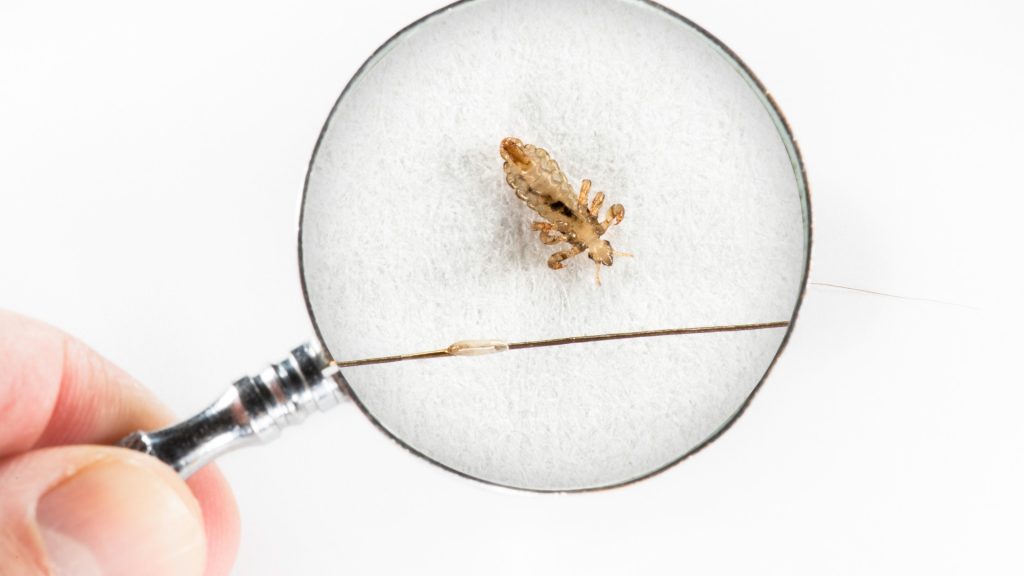
If the transferred louse is a mature, mated female, she will begin laying eggs within 24 to 48 hours of arriving on the new host. Each egg, called a nit, is cemented to an individual hair shaft approximately 3 to 4 millimeters from the scalp surface using a waterproof glue-like substance that is remarkably difficult to remove. A single female lays several nits per day, typically concentrating them behind the ears and at the nape of the neck where temperature and humidity are optimal for egg development. Within the first week, a single female can deposit 50 to 70 nits on the host’s head.
How Does a Lice Infestation Progress During Weeks 1 Through 3?
The first three weeks of a lice infestation represent the most critical window for early detection and intervention. During week one, the founding female continues laying eggs while the first batch of nits begins developing. Nits take about a week to hatch under normal scalp conditions. The nit’s protective casing shields the developing nymph from most environmental threats, including many over-the-counter lice treatments, which is why some over-the-counter treatments fail to eliminate infestations.
By the end of week two, the first generation of nymphs has hatched and begun feeding. Nymphs go through three molting stages over approximately 9 to 12 days before reaching adulthood. During this period, the original female is still actively laying eggs, meaning the infestation now includes the founding adult, dozens of developing nymphs at various stages, and potentially over 100 unhatched nits. The population is growing exponentially, and yet the host may still have no symptoms if this is a first-time infestation.
Week three marks a turning point. The first generation of nymphs reaches sexual maturity and begins mating. A female louse can begin laying eggs soon after reaching adulthood. If even half of the first-generation nymphs are female, the egg-laying capacity of the infestation has multiplied several times over. This is when many parents first notice signs, as itching may finally begin in first-time hosts and the sheer number of lice makes them more visible during hair grooming. Families who suspect early-stage infestations should schedule a professional head check as soon as possible to prevent reaching this stage.
Why Early Detection Changes Everything
The difference between catching a lice infestation at day 5 versus day 21 is dramatic. Early-stage infestations involve fewer lice, fewer nits, and less scalp irritation, making the treatment process faster, more comfortable, and more likely to succeed in a single visit. Regular head checks using a fine-toothed nit comb are the most reliable method for early detection.
What Does a Full-Blown Lice Infestation Look Like After One Month?
By the one-month mark, an untreated infestation has typically reached its most advanced and difficult-to-treat stage. The founding female has laid between 150 and 300 eggs over her lifespan. Multiple generations of lice are now active on the scalp simultaneously, with adults, nymphs at various stages, and hundreds of nits in various states of development.
At this stage, most hosts are experiencing significant symptoms. Persistent itching behind the ears, at the nape of the neck, and across the scalp is common. Secondary bacterial infections can occur from scratching, particularly in children who scratch aggressively. Small red bumps from louse bites may be visible on the scalp and neck. Some children develop difficulty sleeping because lice are most active in the dark. The psychological impact is also significant.
The Nit Accumulation Problem
One of the most challenging aspects of advanced infestations is the sheer volume of nits cemented throughout the hair. Even after all live lice are eliminated, hundreds of nits may remain attached to hair shafts. While empty nit casings are not harmful, distinguishing live nits from hatched or dead ones is extremely difficult without professional training. Parents can misidentify nit status during home checks, leading to either unnecessary retreatment or premature cessation of treatment. Professional nit removal at Lice Lifters of Ocean County uses enzyme-based products that dissolve the glue attaching nits to the hair shaft, enabling thorough removal that home combing alone cannot achieve.
How Long Does It Take to Completely Eliminate a Lice Infestation?
The timeline for complete elimination depends entirely on the treatment method chosen and the stage of the infestation at detection. Over-the-counter permethrin-based treatments, which can be ineffective against resistant head lice, typically require two applications spaced 7 to 10 days apart and may still fail to resolve the infestation. Parents who rely on OTC products often find themselves locked in a frustrating cycle of repeated treatments over weeks or even months.
Professional enzyme-based treatment at Lice Lifters of Ocean County eliminates live lice and removes nits in a single visit lasting approximately one hour. Because the enzyme dissolves the adhesive that bonds nits to the hair shaft, even advanced infestations can be resolved without the need for repeated sessions. The treatment is non-toxic, pesticide-free, and safe for all ages. We provide a 30-day guarantee and a follow-up protocol to ensure the infestation is completely resolved. Professional lice removal services achieve first-visit success rates significantly higher than home treatment approaches.
Post-Treatment Monitoring Timeline
Even after successful treatment, monitoring is essential. The CDC recommends checking the treated individual’s head every 2 to 3 days for the first two weeks following treatment to ensure no nits were missed. Checking all household members and close contacts simultaneously is the most effective way to break the cycle. At our Ocean County clinic, we screen the entire family during every treatment visit for exactly this reason.
Frequently Asked Questions About Lice Infestation Timelines
How long can lice survive off a human head?
According to the CDC, adult head lice can survive for no more than 24 to 48 hours away from a human host because they require blood meals every 3 to 4 hours to survive. Nits that fall off the head are even less viable, as they require the consistent warmth of the human scalp to develop. This is why the AAP emphasizes that environmental cleaning, while helpful, is secondary to treating the infested individual. Lice found on pillows, furniture, or clothing are typically dying or already dead and pose minimal transmission risk.
Can a lice infestation resolve on its own without treatment?
Lice infestations do not resolve spontaneously. Without treatment, lice will continue feeding and reproducing indefinitely as long as they have access to a human host. An untreated infestation will persist for months and can lead to secondary complications including bacterial skin infections, sleep disruption, and significant psychological distress. Professional treatment is always recommended for confirmed infestations.
At what point in the timeline is a lice infestation most contagious?
A lice infestation is contagious from the very first moment a louse is present on the head and remains contagious until every live louse has been eliminated. However, the risk of transmission to others increases as the infestation matures because more adult lice are present and active. This is another reason early detection and treatment are critical.
How can I tell how long my child has had lice?
The distance of nits from the scalp surface provides a rough estimate of infestation duration. Since hair grows at approximately one centimeter per month and nits are laid close to the scalp, nits found 2 to 3 centimeters from the scalp suggest an infestation that is 2 to 3 months old. The CDC notes that nits found more than 1/4 inch from the base of the hair shaft are usually already hatched or dead. A professional head check can help estimate the infestation timeline and determine the appropriate treatment intensity.
Does the number of nits indicate how severe an infestation is?
The number of nits is a useful but imperfect indicator of severity. Many nits visible in the hair may be empty casings from lice that have already hatched, making the infestation appear more severe than its current active state. Professional clinicians at Lice Lifters of Ocean County can distinguish between live nits, dead nits, and empty casings to provide an accurate assessment of the infestation’s current stage and recommend the appropriate treatment approach.
Can lice eggs hatch after treatment?
With OTC permethrin treatments, yes. Most over-the-counter products do not effectively kill nits because the hard outer casing protects the developing embryo. Permethrin has limited ovicidal activity, so some nits can survive a standard application. This is why OTC instructions call for a second treatment 7 to 10 days later. Professional enzyme-based treatment at Lice Lifters physically removes nits from the hair shaft entirely, eliminating the possibility of post-treatment hatching. Our approach ensures that both live lice and all viable nits are addressed in a single comprehensive session.