
Your child can pass lice along only while live, crawling lice are on the head. The CDC says head lice spread mainly by direct contact with the hair of a person who has them, and that lice move by crawling. Nits left glued to the hair after treatment are not what travels. The catch is that some medicines kill lice without killing eggs, so new live lice can hatch days later. That is why checking matters more than counting hours.
What actually moves from one head to another
A live, crawling louse is the only part of an infestation that travels. The AAP describes head lice as crawling insects that cannot jump, hop or fly, and says the main way they spread is close, prolonged head-to-head contact. Eggs behave differently: the AAP describes an egg as attached to a hair shaft near the scalp, and says the empty nits stay on the hair after hatching. The CDC puts the treatment version plainly, that nits may stay in hair after treatment but successful treatment will kill crawling lice.
Items are the exception, not the rule. The CDC lists hats, scarves, sports uniforms, shared combs, brushes and towels, and recently used beds, pillows and stuffed animals as routes that are not as common, and the AAP calls the chance of spread through shared combs, brushes, hats and helmets very small. A shared bed belongs in that group, which is why how lice spread when two heads share a pillow is worth its own answer.
How long after lice treatment can you be around other people?
The hour count is not the thing to watch; the head is. The CDC’s guidance for after a treatment says it takes time to kill all the lice, and that if you notice a few lice still moving slowly 8 to 12 hours after treatment, you do not need to reapply the medicine. The same guidance adds that if you do not find any dead lice, or the lice seem as active as before treatment, the medicine may not be working. Those are two different situations, and the difference shows up on the head rather than on a clock.
So the sleepover on Saturday turns on what a careful check finds. The CDC’s routine for the weeks after a treatment is a check and a comb every 2 to 3 days for 2 to 3 weeks, and its contact advice still applies in the meantime: avoid hair-to-hair contact during play, and do not share combs, brushes, towels, hats, scarves, hair ribbons or barrettes. The CDC also says chlorine levels in pool water do not kill head lice, while head lice are unlikely to spread in a swimming pool.
Why a case can look clear and come back a week later
Because some medicines kill live lice but leave the eggs alive. The CDC says some medicines kill lice and eggs, so retreatment is usually not required for those, while others kill lice but not eggs, which is why a second treatment is recommended. Hatching sets the calendar: the CDC says nits take about a week to hatch, a range of 6 to 9 days, and the AAP puts it at 7 to 12 days depending on the surrounding temperature.
So a head with no crawling lice on Tuesday can carry newly hatched lice the following week, and the child can pass lice on again at that point. For a medicine that kills both lice and eggs, the CDC’s rule for a second round is narrow: treat again only if live, crawling lice are seen several days after treatment, and talk to a healthcare provider before re-treating.
The schedule depends on what the medicine kills:
| What the medicine kills | When a second treatment is recommended |
|---|---|
| Lice and eggs | In 7 to 9 days, if live lice are seen (AAP) |
| Lice only, but newly hatched lice do not live | Only 1 application is needed (AAP) |
| Lice only | Between days 9 and 10, if live lice are seen (AAP) |
The CDC’s list of reasons a treatment fails covers the rest: misdiagnosis, recent application of a combination shampoo/conditioner or conditioner, not following treatment instructions, head lice resisting the medication, and reinfestation after successful treatment. The AAP says lice can be resistant to the active ingredients in over-the-counter treatments in some communities, and its instruction on any product is to follow the directions on the package exactly as written and to call your pediatrician before treatment.
What to look at before you call the head clear
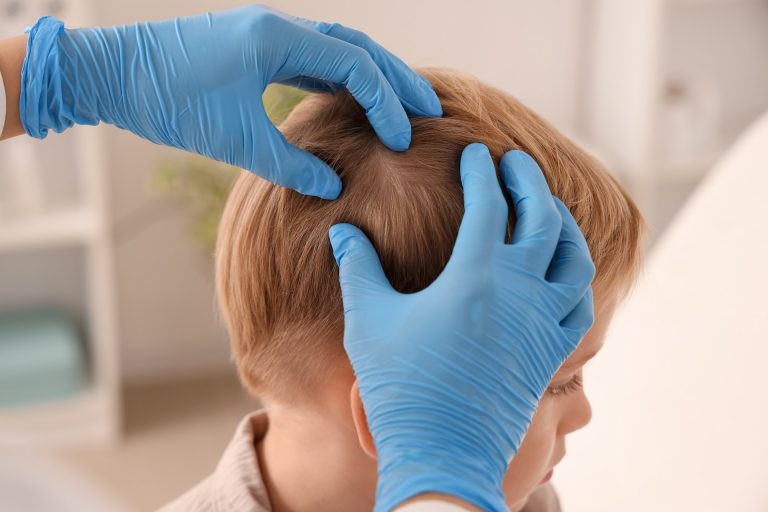
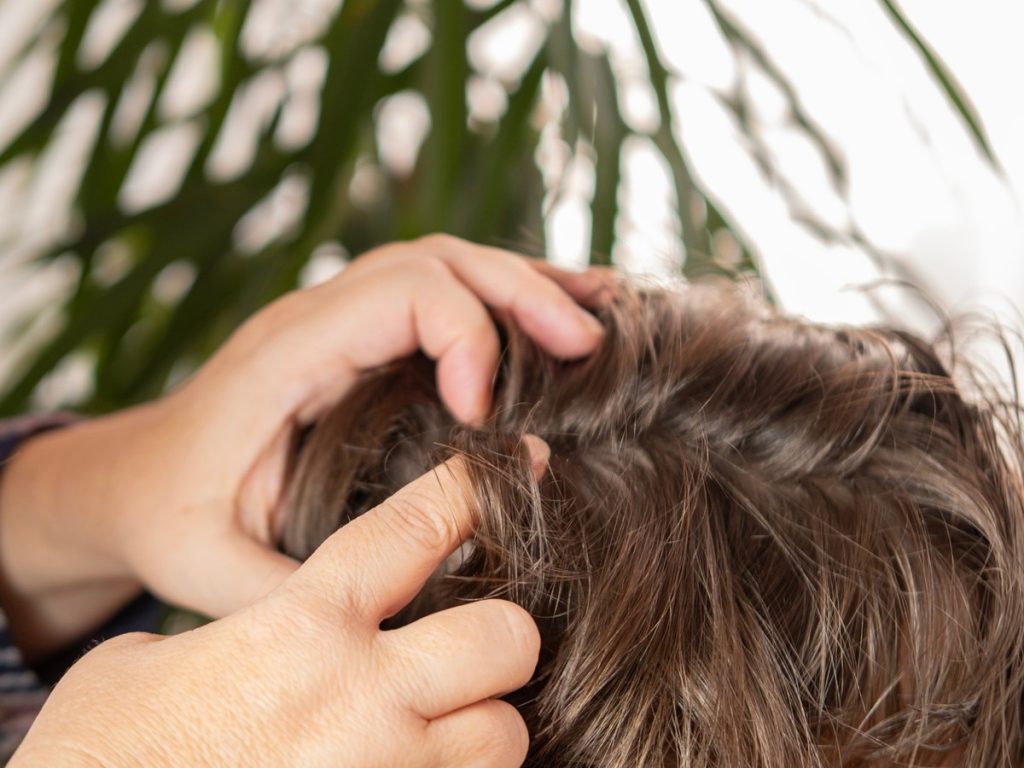
Look for something that moves, section by section, in good light. The AAP’s method is to seat the child in a brightly lit room, part the hair and examine the scalp one section at a time, then wet the hair, comb it in small sections with a fine-tooth comb, and wipe the comb on a wet paper towel after each pass. It warns that live lice are hard to find because they avoid light and move quickly.
The CDC calls misdiagnosis of head lice infestation common, and the test it and the AAP describe is simple: nits are firmly attached to the hair, while dandruff, hair spray droplets and dirt particles are not. The CDC also says nits more than 1/4 inch from the base of the hair shaft are almost always hatched or dead, and that if no nymphs or adult lice are seen and those are the only nits found, the infestation is probably old and does not need treatment. If you are not sure what you are seeing, it says to see your healthcare provider.
What the beds, hats and hairbrushes need
Far less than panic suggests. The CDC says head lice die within two days once they fall off a person and cannot feed, and that the risk from a louse that has fallen onto a rug, carpet or furniture is very small. It adds that spending much time and money on housecleaning is not necessary to avoid reinfestation.
The CDC’s short list for the items that matter:
- Wash and dry the clothing, towels and bed linens used in the two days before treatment, with the hot water cycle at 130 degrees Fahrenheit and high heat drying.
- Seal what cannot be washed in a plastic bag for two weeks.
- Soak combs and brushes in hot water of at least 130 degrees Fahrenheit for 5 to 10 minutes.
For the bedding question on its own, how long lice can live on sheets and pillows goes further. One more line from the CDC belongs on the family calendar: check all household members and close contacts, and treat everyone infested at the same time, including the people they share a bed with.
Frequently Asked Questions
How long after lice treatment are you contagious?
Until there are no live, crawling lice on the head. The CDC and the AAP both define the risk by contact with live lice rather than by elapsed time since a treatment. A treated head that still carries old nits can be hugged. A head that looks fine but still has two surviving lice can pass them along, so the count that matters is the live one.
Are nits contagious after treatment?
No. An egg is cemented to a hair shaft: the AAP says lice attach their eggs to hair close to the scalp with a sticky substance that holds them firmly in place, and that eggs are usually found within 4 to 6 mm of the scalp and do not survive farther away. The risk with a nit stays on the head it is glued to: an egg the medicine did not kill can still hatch there.
Why does my child still feel something crawling?
Itching can outlast the insects. The AAP says itching caused by head lice can last for weeks, even after the lice are gone, and the CDC describes the itch as an allergic reaction to louse bites. The CDC also lists a sensation of something moving in the hair as a symptom of lice, so a crawling feeling is a reason to check the head again. If the feeling drags on, how long itching lasts after lice treatment is its own question.
Can head lice transmit disease or make a child seriously ill?
No. The CDC says head lice do not transmit any disease and therefore are not considered a health hazard, and the AAP says that although head lice may be a nuisance, they do not cause serious illness or carry any diseases. The CDC does list sores on the head caused by scratching, which can sometimes become infected with bacteria normally found on your skin.
Can adults get head lice?
Yes. The AAP says anyone can get head lice, and MedlinePlus says children ages 3 to 11 and their families get head lice most often. The CDC counts household members and caretakers in the group where infestation is most common, which is why a household check includes the adults.
How our clinic settles the question
If you are staring at a head and cannot tell what you are seeing, that is where we come in. Lice Lifters of Ocean County checks the whole family, because one head nobody looked at is how a case comes back, and a certified technician can tell you whether a speck on a hair shaft is a nit or something else, and whether any live lice are on the head. Our professional lice treatment is non-toxic and done in one visit, and same-day appointments are available when the week has already gone sideways. Our 30 Day Guarantee applies when the whole family is checked. If a treatment is behind you and the doubt is not, book a head check and let someone else do the looking.